


Stream Lines | No Clear Solution


by Bob Reece
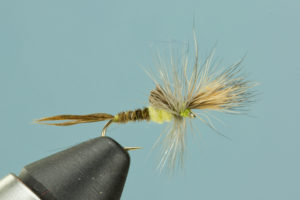
Transition stages in the subsurface development of aquatic insects are often times of vulnerability. During these metamorphic moments, the bug’s full range of motion and the responsiveness of its senses are temporarily lost. This means easy food for trout. With these factors in mind I designed my 307, a transitional mayfly pattern that is a productive divergence from the norm.
The Tiemco 2499BL-Bk hook pins itself in place in trout jaws with its upturned super point, and has the strength to handle large fish. Its matte black finish can be beneficial on heavily pressured waters.
Flouro Fiber forms the tail of this pattern. Small UTC wire inserted into midge stretch tubing is used to create raised segmentation in the abdomen. The smoothly raised divisions of the wire accent the transparency provided by the stretch tubing. This combination is very durable.
Ostrich herl and Ice Dub form the bulk of the thorax. Their movement and reflectivity suggest opaque appendages and internal gasses in the transitioning naturals. The enlarged and elevated wing case further accentuates this important trigger.
The mottled tungsten bead accelerates the 307 to the targeted depth. More importantly the mottled olive and brown colour provides a more natural look than the metallic sheen of traditional beads. This can be especially important in times of extreme water clarity. It is also beneficial on waters that see heavy fishing pressure.
Anytime mayflies are hatching, a properly presented 307 will produce fish. I often fish it as a dropper below my preferred dry in the early morning and late-day hours. During an active hatch I shorten my dropper tippet so the 307 rides six to eight inches below my dry. This can be deadly when the colouration of the fly matches the emerging mayfly. It’s also important to remember that many emerging mayflies fail to break through the surface film and subsequently perish. These failed emergers sink and drift along the bottom. As a result, the 307 is also an effective pattern for deeper water indicator-rigs. Click here to check out the tying video.
Fly anglers don’t always have access to in-depth bug charts when they’re out on the water, and sometimes entomology’s Latin terminology doesn’t stick all that well in the long term memory. One of Fly Fusion’s fly-tying editors, Al Ritt, provides a quick-reference entomology framework with ideas and patterns for anglers who want to go deeper and are looking for a good place to start.
A sneak peek recipe…please “Read More” for more recipes and to to read the full article.
Tail: Ringneck pheasant tail fibers
Rib: Fine gold wire
Abdomen: Ringneck pheasant tail fibers (butts of tail fibers)
Thorax: PMD Superfine dubbing
Spike: Deer hair
Hackle: Dun dry fly hackle
IDAHO FALLS, IDAHO (May 23, 2018) – RIO Products celebrates amateur film makers in the fly fishing arena with its second annual RIO Amateur Fly Fishing Film Awards. With many great films submitted for year two, Meris McHaney took away the grand prize for 2018 with her film Lucky.
McHaney wins an all-expenses paid trip to Idaho Falls to fish for three days with the RIO team, $300 value of RIO products, a $500 cash prize, and a “short film” category entry in the International Fly Fishing Film Festival (IF4) – courtesy of our media partner Fly Fusion magazine. The runner-up, “Matapedia” receives $500 worth of their choice of RIO Products.
Meris said, “I created this film to capture the passion I have for fly fishing and wanted to show people how beautiful the Texas Coast is and how the sport brought me closer with my dad. I’m so fortunate to get to sight cast to fish so close to home and I felt like the story I’ve had with fly fishing needed to be shared. I’m so thankful RIO hosts such a great competition for amateur filmmakers. The whole company has been so amazing and all the buzz from the film is very exciting. I can’t wait to get to Idaho to fish with the RIO crew and get some great gear; I’m so lucky they believed in me and my story.”
The Viewer’s Choice Award saw a tie between Ken Tanaka with “Obsession” and Mike Silva with “A Fish-mas Story”. They both receive $1,000 worth of Sage, RIO and Redington products, and the runner up will receive $500 worth of RIO products of their choice. See all submissions here.

Cranbrook, BC (May 21, 2018)—Drafts happen in lots of sports but obviously not fly fishing. If they did, Fly Fusion Magazine just earned the coveted first pick as far as filmmakers.
Professional fly-fishing filmmaker, Gilbert Rowley, recently joined the Fly Fusion team as the director of photography. As a guide, a fly tier, and a cinematographer, Rowley brings a wealth of all the right types of experience. He complements the magazine’s editorial staff.
Rowley’s direct influence will primarily be from behind the camera. The publishers brought him on to develop more film content for the magazine. He’ll be working with the editors to continue to produce quality films for the IF4, play an integral role in the Fly Fusion Series, and develop instructional videos that supplement magazine content.
Rowley said, “I’m very excited to be joining a team that has both vision and values and really looks to promote fly fishing in responsible ways. I’ve looked up to those involved with Fly Fusion for a very long time.”
“I am beyond humbled by this opportunity. I look forward to adding my skillset of filmmaking and creativity to an already thriving company. The Fly Fusion culture reflects my personal beliefs and artistic views of the good that comes from fly fishing,” said Rowley.
Fly Fusion founding editor, Derek Bird, said, “I’m really excited about working with Gilbert. When Jim (McLennan) and I are out filming the Fly Fusion Series, the people behind the cameras are essential to the success of the series. Jim and I might be the faces in front of the camera, but it’s a team effort and we can’t do what we do without having extremely talented guys like Gilbert doing what they do. I’m really looking forward to working with Gilbert.”

You don’t want to miss out on Fly Fusion’s summer issue. It’s loaded with cutting-edge fly patterns that will add to your dry-fly success, with thought-provoking strategies on using slack line to your advantage, and with guide tips on how to better read a stream. It’s also got so much more including a special bonus. The editors compiled a list of some of their favourite gear for the “Great Gear Giveaway”. There’s a number of coveted items that made the list including a Water Master. The summer issue is in subscribers’ hands now and is set to hit newsstands the last week of May. If you’d rather not wait to join the Fly Fusion family click here to subscribe.
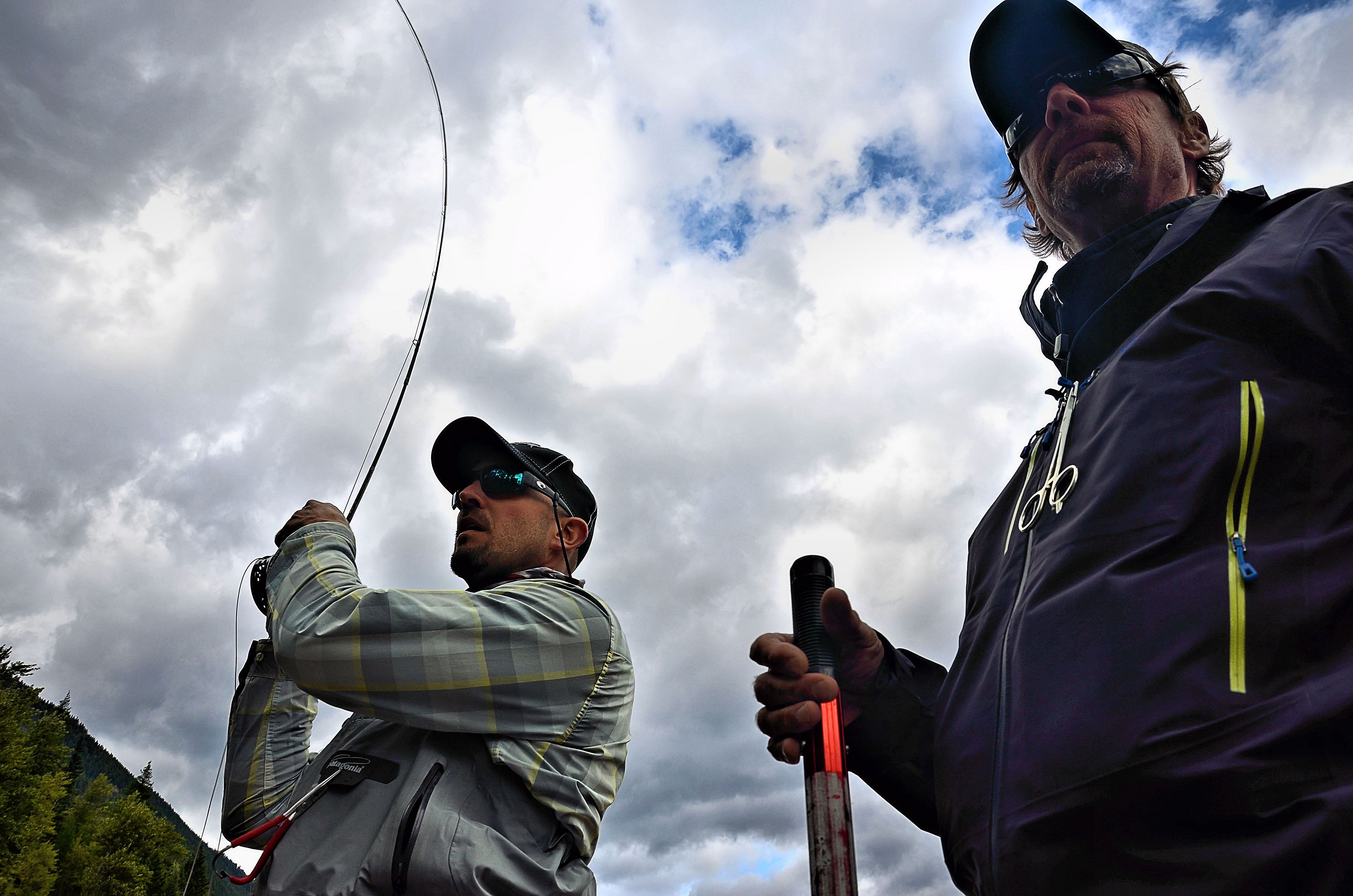

Fly Fusion caught up with Cortney Boice, Spencer Higa, Derek Olthuis, and Phil Tuttle of In-Tents Media to discuss the award-winning fly-fishing films, growing iconic beards, and catching prehistoric browns. Check out the interview by clicking on the image.
