


Two decades ago, alerted by headlights shining on my parent’s front lawn, I slipped silently out the front door and threw my pack into the bed of an old forest service truck.
I was 14-years-old and heading to a high mountain lake filled with cutthroat. In the driver’s seat was a business partner of my father’s, a real estate investor whose love for the outdoors mirrored my own. Although he was 16 years my senior, John and I formed a fast friendship, spawned in large part by that first outing together. As we bumped our way up the dirt road toward the trailhead we talked fishing and hiking and what excitement the day would provide. Only now, with the benefit of hindsight, do I realize what having a mentor such as John has provided for my life.
I don’t know how many fish we caught that particular day but burned into my memory is another outing with John, when we pulled 78 trout out of Whale Lake, all on a dry fly. “Whale Lake” isn’t listed on any tourist brochure or forest service map. That was John and wife Judy’s moniker for one of their favourite haunts, declared as such after a friend took a swim with all his fishing gear on.
“The fish must have thought a whale was after them with such a big splash,” Judy remarked, or so the story went, according to John. To a teenage angler spending a day free from responsibility or any outside pressure, the denomination was funny and fitting enough to stick.
The incredible spruce moth hatch at Whale Lake probably helped, too. The fish were engorging themselves; anything that resembled a mottled cream morsel was getting demolished. I still recall vividly John’s old flannel shirt, his straw hat and the sight of hungry trout cruising the shoreline in search of an easy meal.
Maybe it was our angling success that day which imprinted the memory of Whale Lake on my mind so enduringly, but my hunch is that is goes much deeper than hungry fish and a proliferation of bugs. I’d spent a few days on high mountain lakes before, but without a car it was usually difficult to figure a way to get to the trailhead, much less find someone who wanted to join. I didn’t realize how much I was pining for a friend to share the experience with until John asked me to fish with him.
Years later, John and I have hiked and fished countless high mountain lakes. At the time, I thought we were just two buddies—albeit atypical ones—heading out for the day. Years later, as I look back and consider the value his friendship has added to my life, it is apparent those days spent hiking off of old Montana logging roads were about far more than the pan-sized cutties we were hooking. It’s easy to see the appeal of watching a trout rise through crystal clear water to eat a dry, but it’s much harder to convey the importance of a relationship built over time. Being willing to hike in to find fish is one thing, being willing to help someone who otherwise wouldn’t be able to get to the trailhead and help foster a connection with nature is another thing entirely.
This past summer a few neighbourhood kids approached me with some questions about fly fishing. We talked tactics and gear before I was wise enough to see the opportunity in front of me. I clued in that it was my turn, and my privilege, to pay it forward.
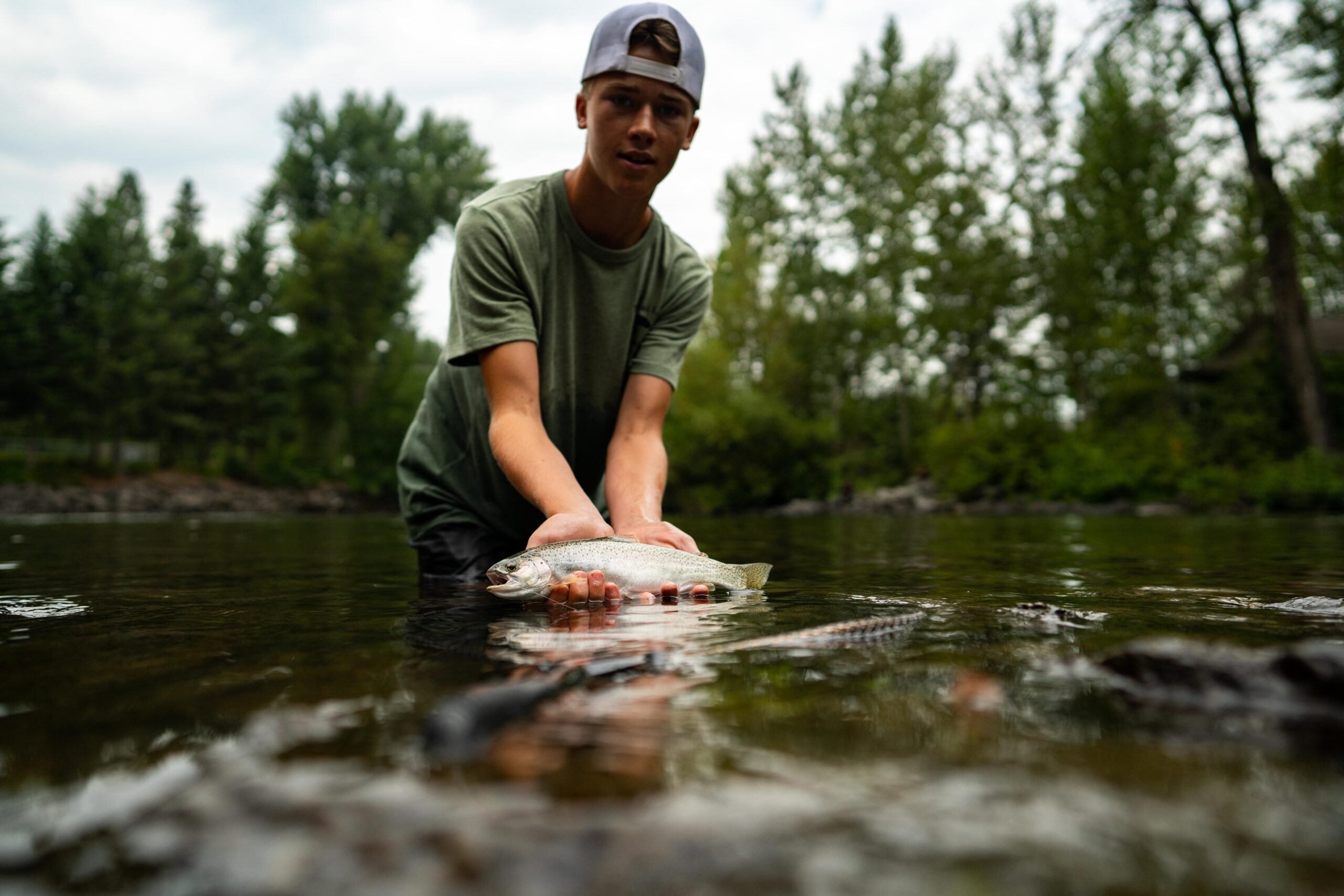
My friend John had taken a kid who was unable to drive and unsure of where to fish and given him the chance of both fishing and friendship. Now it was my turn. After getting the OK from their parents, the neighbourhood kids and I spent the day bouncing up a local river, mostly casting dries to small rainbows and cuts. This truly was life coming full circle. We were fishing a spot that, when I was their age, was one of my favourite places to fish. In this context, seeing 12-inch rainbows smash a dry was so much more fun as a spectator than it could ever have been had I been the one holding the rod. Their smiles were my smiles, their exuberance was my exuberance, all those years ago.
Fly fishing has been the catalyst to many important moments in my life. It has been a vehicle for travel and exploration and served as the bridge to many lasting friendships. It’s clear to me now, however, that the real value I cherish comes in the form of sharing my passion with someone else. Perhaps one day, someone will look back at their life of fly fishing and reflect that it was my invitation that enabled them to find their own passion—just like John helped me all those years ago.