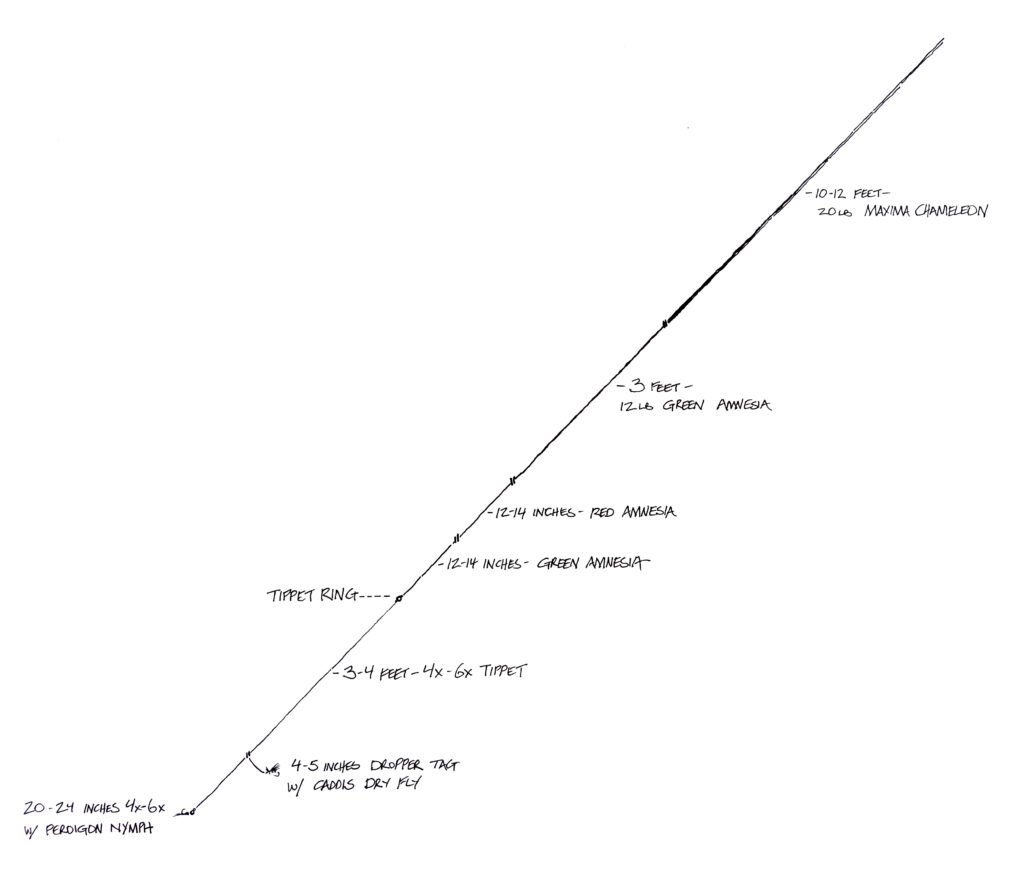


The riffle directly in front of us took up a small portion of the heavily pressured tailwater we were fishing that day. It was a sweaty, hot afternoon on the river with a couple of good friends who happen to be exceptional anglers. Myself, along with Lance Egan and Devin Olsen, had arrived at first light, hiked as far away from the crowds as possible, and began searching for fish with a variety of methods and techniques. It was the middle of Summer, birds were singing, the water felt cool as we wet waded, and there were bugs of all types crawling on the foliage and flying all around us. Small yellow Sally’s were representing the stoneflies while PMD’s were the primary mayfly offering. Most notable however was the vast number of caddis. There was the occasional female adult returning to the water for a mid-day deposit of eggs, but most were hanging in the willows waiting for the air temps to cool before their evening dance above the water’s surface. Nymphing had produced a decent number of fish that morning, but this riffle looked prime for a different opportunity that only required a single fly change. Both Devin and Lance clipped off their top nymph in their Euro nymphing setup and tied on their favorite caddis adult imitation. Interestingly, they left the weighted nymph tied below in a dry-dropper fashion. However, instead of fishing their rig in a dead drift, they began giving their rods a gentle shake which caused their dry fly to slightly bounce up and down on the water’s surface. They weren’t “skating the caddis” as many anglers do at last light. They were purposefully dancing their dry flies on and above the water’s surface, imitating the motion of egg-laying female caddis. It didn’t take long before brown trout of all sizes began doing cartwheels and aerial acrobatics unlike I’d ever seen all while trying to crush their dry flies. This was the first time I was introduced to “bouncing” a caddis dry fly to induce fish to rise. Needless to say, since then it has been one of the techniques I’ve turned to the most when fishing surface flies on those hot, sweaty Summer days.
Brief Life History of Caddis (Trichoptera)
Before we jump into how this technique is performed, let’s first take a brief look at why it is effective. Caddis are one of the most abundant food sources on most trout rivers worldwide. These underwater architects live out the majority of their lives on the streambed as larva. Some build elaborate cases out of small sticks, rocks, or other debris while some species exhibit a simpler appearance as free-living caddis, without a case. Within the water column trout feed on caddis larvae all year long, but the real fun for those who prefer to fish dry flies begins after they pupate, completing their underwater existence, and emerge into our terrestrial environment. This typically occurs from late Spring to early Fall which means trout see caddis adults all Summer long. As adults, they typically only live for a week or two and their primary purpose is to reproduce. After mating the females return to the water in order to deposit their eggs. This is accomplished in many species by dancing and bouncing above, and on top of the water’s surface. Unlike mayflies, they are still exceptional flyers at this stage in their lives, and frequently elude hungry trout by performing this dance ritual. Trout are aware of their behavior and will aggressively hunt for these females that are returning to the water’s surface. Have you ever wondered why trout rises are extra splashy when they eat your elk hair caddis imitation? It’s because they have learned that if they don’t eat caddis quickly and aggressively they will miss their opportunity. There are no casual sippers when trout are targeting caddis adults. Thus, trout have been conditioned for their entire existence to actively pursue caddis adults during these hatch times, and that is why actively bouncing a caddis dry fly is effective.