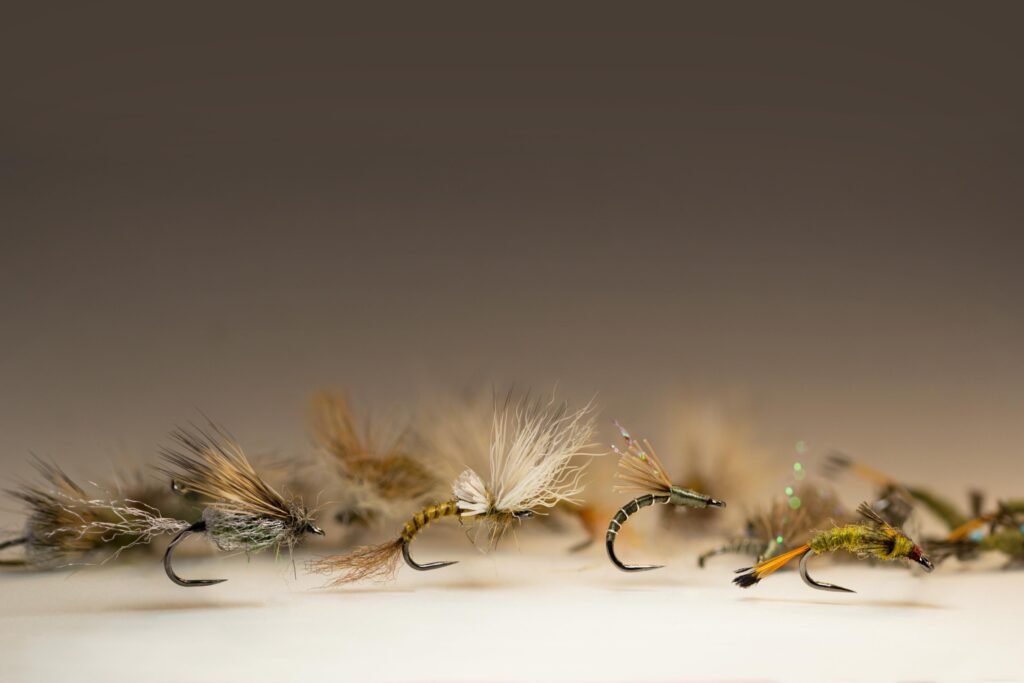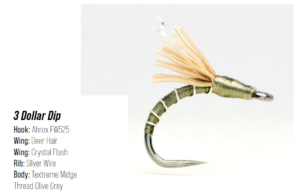


Open your fly box and tell me what you see. Mine depends on the season but usually contains a semi-organized assortment of nymphs, dries and streamers. Usually in some corner, or squished next to the hinge, you might find a squirmy and perhaps an emerger or two. I say usually, but things are changing and an increasing amount of emergers are starting to line up right beside the dries. Until recently, I had not given much thought or attention to emergers. I mean, I’m either nymphing or dry flyfishing. That leaves emergers as, that thing in between. It’s not a truck, nor a car. Perhaps it’s a minivan? You could also argue whether you even really need the things that are in between? Due to unusual spring weather in Alberta this year, I had to keep off the rivers until late June. Consequently, I have spent much more time on the lakes. One thing about lake fishing, it gives you a lot of time to sit, observe and think. The shallow, crystal clear lakes of the Rockies are favourable to sight fishing. This leads to the ability to study fish behaviour vis-à-vis one’s fly selection and presentation. So, a lot of sitting, fishing and watching is what I’ve done, and came up with a new opinion regarding minivans.
Fish are lazy. Ok, maybe lazy is the wrong adjective. Fish are energy efficient. Most of them will not go after a food source unless the expenditure of energy is less than the caloric gain from eating the prey. For that reason, larger specimens will aptly chase a streamer for many metres as the reward is great. Alternatively, small trout in rivers will typically not move more than 30 cm for passing morsels. The prey’s mobility also plays a crucial role in the fish’s decision whether to pursue or not. The more vulnerable and immobile the target, the more appetizing it becomes, as a positive outcome is more certain. One only must think of those warm summer evenings when the spinners fall and unabashed feeding frenzies explode at the back of a pool. A feeding behavior that most fly anglers wish for and seldom take full advantage of. Equally important, although not as visually stimulating as the “All you can eat spinner dinners”, are the low key emerger buffets. This stage of the hatch is harder to detect. It is important to identify the arrival of emerging insect and having the appropriate patterns ready.
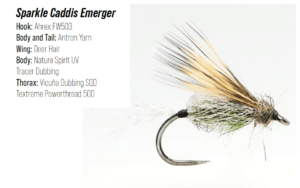
A I sat on that lake on a warm sunny morning, I watched multiple fish rise and tied on an Elk Hair Caddis. A beautiful specimen took something less than a foot from my fly. Nothing was visible on the surface, so I tied a small ant. Still, no takers. Frustrated I stared at fish swimming down just bellow the boat. As my eyes switched focus, I saw something small in the water film. A small caddis, struggling to poke through to the surface. Then it made sense. The fish were keyed onto those helpless caddis emergers. I tied on a size 14 Dodge Caravan (Sparkle Dun).